Description
KSL1100XS-MGI4 is a compact four-chamber ( 4"x4"x4") muffle furnace with a separate 4-channel programmable temperature controller. It is the ideal muffle furnace for sintering samples at high throughput up to 1100 °C in material research. The 4-chamber furnace can be put in a standard glovebox to treat samples under an inert atmosphere
SPECIFICATIONS:
|
Features
|
- Integrate four mini muffle furnaces into one frame to save space and energy.
- Drop-down door for easy and safe sample loading
- Small enough to place inside a standard glovebox, while a separate temperature controller is put in the outside glovebox via KF40 feedthrough
|
|
Power
|
- 110V version: 950 W (15A Fuse) for each furnace ( power cord is included), Plug: NEMA 5-15P) , Total power consumption 3800 W
- 220V version: 1.2KW(10A Fuse) for each furnace (power cord is included without a power plug.)
|
|
Operating Temperature
|
- 200 °C - 1000°C max continuously for each chamber
- 1100°C max for an hour
- Note: If you would like to use the furnace at 35 - 200 °C as a drying oven at extra cost, please let us know in advance to present another set of PID parameters.
|
|
Max. Heating Rate
|
- 30 °C /min Max.
- 10oC / min recommended for longer service life
|
|
Temperature Controller
|
- The 4-channel temperature controller is separated from the integrated furnace unit.
- Each controller has PID automatic control and an auto-tune function.
- 30 programmable segments for each heating chamber
- Built-in protection for overheating and a broken thermocouple.
- Optional software is available at extra cost to operate the furnace by a laptop in a remote place.
|
|
Temperature Accuracy
|
- +/- 1 °C from 200 °C to 1100 °C
|
|
Heating Elements
|
Fe-Cr-Al Alloy doped by Mo
|
|
Thermocouple
|
K type x 4
|
|
Compliance
|
- CE Certified
- NRTL (UL61010) or CSA certification is available upon request at extra cost.
|
|
Warnings
|
- Toxic or explosive gases are not recommended for use with this furnace
- Small cracks may appear on the surface of the refractory ceramics over extended use. This is a normal occurrence and the cracks may be repaired with alumina coating.
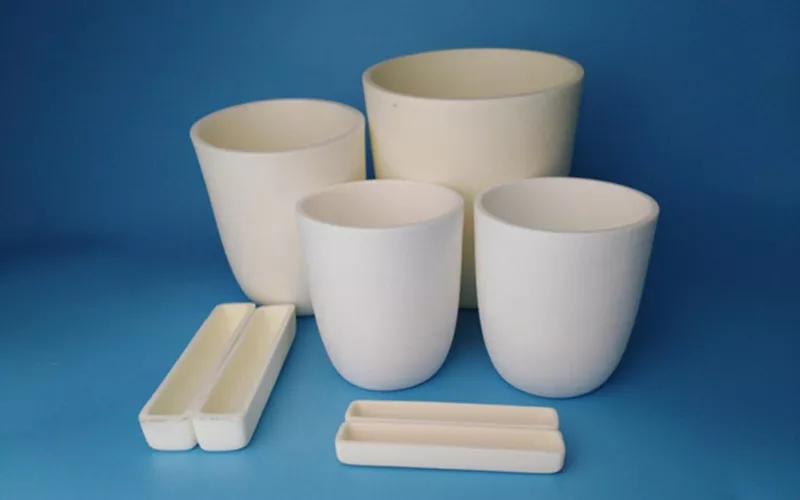
- You shall place the sample into a crucible as below. Never place the sample on the chamber bottom directly.
-
|